Tree removal
Tree removal.
A plan for the whole property.
Large, hazardous, or unwanted trees call for a site-specific plan. Tree condition, nearby structures, equipment access, and cleanup all shape the work.
When does removal make more sense than trimming?
Removal may be considered when the whole tree is the concern, such as a dead or declining tree, damage that requires assessment, or a location that conflicts with the use of your property. Trimming may still be an option when the concern is limited to particular limbs.
Describe what has changed and what is nearby. The estimate conversation should establish whether you are dealing with a pruning decision or a complete removal.
Can a tree close to a house be removed?
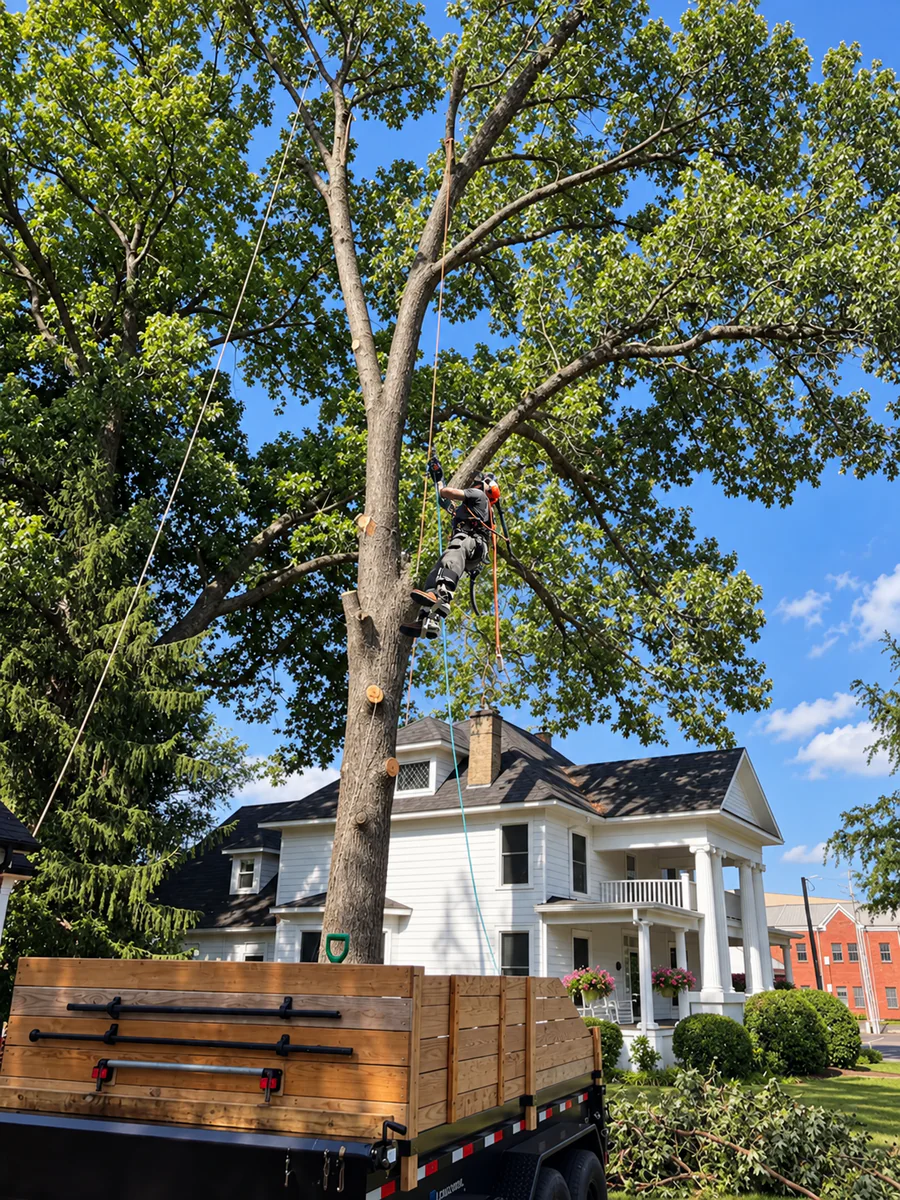
Proximity to a house changes the method. The tree, working space and structures beneath need to be assessed before a suitable approach can be recommended. Climbing and rigging may be considered where conditions allow sections to be handled in a controlled way.
No method eliminates every risk. A property-specific plan is more useful than a promise made without seeing the tree.
Questions before you book
What should I share for a removal estimate?
Your city or ZIP, the tree’s condition, what is close to it, and any driveway, gate or backyard access limits. Mention a recent storm or new damage as well.
Are the stump and all debris included?
The removal scope should say what happens to wood, branches and debris. Ask specifically about stump work and haul-away; they are not assumed to be included.
My tree was damaged in a storm. Where should I start?
Keep clear of damaged or hanging limbs, then discuss the condition and location. Storm damage cleanup explains what to share and when to keep away from the area.
Start with your tree.
Share your location and the concern. We can discuss availability and the next step.